http://www.chron.com/content/chronicle/special/angelisland/intro.html
http://www.geefamilyhouston.org/FamilyPages.htm
http://www.angel-island.com/
Monday, March 27, 2006

Saturday, March 25, 2006
Guangdong Industry
Industry: Light industry has always been of significance in the province. Apart fromhandicrafts, light industry -- especially food processing and the manufacture of textiles -- accounts considerablly the provincial industry. Sugar refining is centred in Guangzhou, Dongguan, Shunde, Jiangmen and Shantou, while silk filature (the reeling of silk from cocoons) and weaving are well developed in Guangzhou, Foshan and Shunde.
Guangdong History
History: Guangdong was originally occupied by non-Han ethnic groups, and was first incorporated into the Chinese Empire in 222 BC, when Qin Shi Huang, the first emperor of the Qin dynasty, conquered the area along the Xijiang River and Beijiang River valleys down to the Zhujiang River Delta. In 111 BC Emperor Wu of the Han Dynasty extended rule as far as to Hainan Island. During the five centuries of the Sui, Tang, and Northern Song dynasties from AD 581 to 1126, the military and agricultural settlement of Guangdong, coupled with increasing overseas trade through Guangzhou port, led to an increase in migration into Guangdong, and to the rise of Guangzhou as a metropolis with a population of hundreds of thousands. Two major southward thrust of the Han Chinese took place, one in 1126, when Jurchens captured the Song capital, the other in 1279, when Mongols subdued Song dynasty. These migrations marked the beginning of the rapid cultural development of Guangdong. The population grew so fast that by the late 17 century, Guangdong had already become an area from which emigration took place. Migrants from Guangdong moved first to Guangxi, Sichuan and Taiwan and then in mid-19th century began to pour into Southeast Asia and North America
Colliery flooding
19 die in colliery flooding
www.chinaview.cn 2006-03-25 08:05:57
BEIJING, March 25 -- The flood which submerged a colliery in North China's Shanxi Province a week ago has claimed the lives of at least 19 miners, with nine others still missing, according to local officials.
"Rescuers are doing everything they can to search for those still missing," an official at the command centre in Shanxi's Linxian County told China Daily on Friday. The survival chances of the trapped are now "very slim."
The official said thick silt in the pit hampered rescue efforts, as rescuers tried to pump out the slush, mud and coal dust.
According to Xinhua, the underground ventilation system has now resumed operation and a team is investigating the cause of the accident.
Officials say the coal mine was supposed to conduct a safety rectification, which prohibits production, just days before the accident. No more than nine miners are permitted to enter the colliery for maintenance of the shaft.
"A total of 58 miners were working in the pit when the accident took place," said Wang Silai, vice-director of works safety in the city of Luliang, which supervises the county.
Officials said chaotic management and loopholes in work safety practices allowed the miners to dig into a previous coal mine, which led to the sudden flooding.
The owner of the coal mine is now in custody and the provision of compensation for the victims is underway.
The accident took place at 3:30 pm on March 18 in the Fanjiashan Coal Mine in Linxian County. Of the 58 miners who were working under the shaft, only 30 managed to escape.
Meanwhile, a gas explosion in a coal mine in North China's Hebei Province early this week killed eight miners, injuring five others.
According to officials with the provincial work safety bureau, the owner of the No 2 Huzhuang Coal Mine in Zhuolu County tried to cover up the March 20 tragedy.
Inspectors rushed to the site to deal with the aftermath and to investigate the cause of the accident.
Li Yizhong, head of State Administration of Work Safety, said the Chinese Government has vowed to shut down 35,800 unsafe mines this year including 6,000 collieries around the nation, in a bid to reduce the death toll from mining accidents.
(Source: China Daily)
www.chinaview.cn 2006-03-25 08:05:57
BEIJING, March 25 -- The flood which submerged a colliery in North China's Shanxi Province a week ago has claimed the lives of at least 19 miners, with nine others still missing, according to local officials.
"Rescuers are doing everything they can to search for those still missing," an official at the command centre in Shanxi's Linxian County told China Daily on Friday. The survival chances of the trapped are now "very slim."
The official said thick silt in the pit hampered rescue efforts, as rescuers tried to pump out the slush, mud and coal dust.
According to Xinhua, the underground ventilation system has now resumed operation and a team is investigating the cause of the accident.
Officials say the coal mine was supposed to conduct a safety rectification, which prohibits production, just days before the accident. No more than nine miners are permitted to enter the colliery for maintenance of the shaft.
"A total of 58 miners were working in the pit when the accident took place," said Wang Silai, vice-director of works safety in the city of Luliang, which supervises the county.
Officials said chaotic management and loopholes in work safety practices allowed the miners to dig into a previous coal mine, which led to the sudden flooding.
The owner of the coal mine is now in custody and the provision of compensation for the victims is underway.
The accident took place at 3:30 pm on March 18 in the Fanjiashan Coal Mine in Linxian County. Of the 58 miners who were working under the shaft, only 30 managed to escape.
Meanwhile, a gas explosion in a coal mine in North China's Hebei Province early this week killed eight miners, injuring five others.
According to officials with the provincial work safety bureau, the owner of the No 2 Huzhuang Coal Mine in Zhuolu County tried to cover up the March 20 tragedy.
Inspectors rushed to the site to deal with the aftermath and to investigate the cause of the accident.
Li Yizhong, head of State Administration of Work Safety, said the Chinese Government has vowed to shut down 35,800 unsafe mines this year including 6,000 collieries around the nation, in a bid to reduce the death toll from mining accidents.
(Source: China Daily)
Chinese Abroad
Chinese living abroad want to return
www.chinaview.cn 2006-03-25 14:25:09
BEIJING, March 25 -- The majority of Chinese people living abroad want to return to China to work, but they expect to earn more than 10,000 yuan (US$1,235) a month and hold at least a mid-level management position, a recent survey suggests.
High expectations have become the biggest obstacle for returned overseas Chinese to find a job in the country, said human resource experts.
ChinaHR.com, one of China's leading Web-based headhunters, asked 3,097 overseas Chinese living in 49 countries and regions about their attitudes towards coming back to China to work.
Nearly 88 percent of people surveyed said they would like to return to China to work, but more than 40 percent said they would have to earn at least 10,000 yuan a month.
Only 2 percent of respondents said they would accept a salary of less than 4,000 yuan a month, which is nearly double the city's average income, the survey reported.
Respondents also said they would prefer to work for foreign-invested companies in Shanghai or Beijing, according to the survey.
"Returnees always have high expectations about their position and payment, and are picky about the job location and company," said Zhang Tingwen, director of ChinaHR.com's human resources research center.
Those high requirements usually prevent them from taking jobs in China, he added.
For instance, a 37-year-old Shanghai-native surnamed Xu returned to the city to find work last August after completing an MBA in France. While he has received several job offers, Xu is still waiting for a management position.
"It will be a big waste of my overseas MBA degree if I can't be at least a manager," Xu said, adding that he would rather continue to wait.
Xu is not alone. An earlier report indicated that 35 percent of returned overseas Chinese find it difficult to land a satisfactory job.
Zhang said that China's gradually opening economy had created abundant job opportunities for returned overseas Chinese, who have stronger foreign language skills and more international experience.
(Source: Shanghai Daily)
Editor: Liu Dan
www.chinaview.cn 2006-03-25 14:25:09
BEIJING, March 25 -- The majority of Chinese people living abroad want to return to China to work, but they expect to earn more than 10,000 yuan (US$1,235) a month and hold at least a mid-level management position, a recent survey suggests.
High expectations have become the biggest obstacle for returned overseas Chinese to find a job in the country, said human resource experts.
ChinaHR.com, one of China's leading Web-based headhunters, asked 3,097 overseas Chinese living in 49 countries and regions about their attitudes towards coming back to China to work.
Nearly 88 percent of people surveyed said they would like to return to China to work, but more than 40 percent said they would have to earn at least 10,000 yuan a month.
Only 2 percent of respondents said they would accept a salary of less than 4,000 yuan a month, which is nearly double the city's average income, the survey reported.
Respondents also said they would prefer to work for foreign-invested companies in Shanghai or Beijing, according to the survey.
"Returnees always have high expectations about their position and payment, and are picky about the job location and company," said Zhang Tingwen, director of ChinaHR.com's human resources research center.
Those high requirements usually prevent them from taking jobs in China, he added.
For instance, a 37-year-old Shanghai-native surnamed Xu returned to the city to find work last August after completing an MBA in France. While he has received several job offers, Xu is still waiting for a management position.
"It will be a big waste of my overseas MBA degree if I can't be at least a manager," Xu said, adding that he would rather continue to wait.
Xu is not alone. An earlier report indicated that 35 percent of returned overseas Chinese find it difficult to land a satisfactory job.
Zhang said that China's gradually opening economy had created abundant job opportunities for returned overseas Chinese, who have stronger foreign language skills and more international experience.
(Source: Shanghai Daily)
Editor: Liu Dan
Friday, March 24, 2006
Chinese in Canada
http://www.ubyssey.bc.ca/20060317/article.shtml?Colours/01.html
An unforgotten chapter in Canadian history
After thousands of Chinese immigrants built the railway, the Canadian government imposed a malicious head tax to stem further immigration. Now, Chinese-Canadians want an apology. A look at the where the redress movement stands in Canada’s modern political landscape.
by Colleen Tang
Sid Tan’s grandfather came to Canada when he was only 19 years old. Arriving in 1919, Chow Gim (Norman) Tan made a living working as a cooking assistant on a track steamer.
“He made his home in Canada,” said Tan of his grandfather. “He believed enough in Canada.”
Tan’s grandfather, like all Chinese immigrants at the time, was forced to pay a $500 head tax upon his arrival in the country. For nearly half a century, though, Tan’s grandfather could not be reunited with his whole family.
“The government of Canada separated [my grandma] from her husband for 25 years by a racist law,” said Tan.
It wasn’t until 1964 that Norman Tan was granted Canadian citizenship, along with his young grandson.
Tan indicated that his family’s history in North America went as far back as the San Francisco gold rush of 1849.
“In our family, after over 150 years of Tan men coming to Canada, it’s only in my generation...that [Tan children] were born in North America.”
The Chinese Immigration Act
About 17,000 Chinese labourers were employed working on the Canadian Pacific Railway. They were referred to as ‘cheap labour’—paid one dollar per day, less than half of what their white colleagues made. The jobs that were offered to the Chinese workers included laying track and tunneling. They were also saddled with the most dangerous tasks, such as handling explosives. Of the 17,000 workers, approximately 700 died on the job.
But after the railway was completed in 1885 it was made clear that neither they nor their services were needed anymore. Almost immediately, a head tax payment of $500 was imposed on all Chinese people wishing to enter the country.
The head tax did not stop Chinese immigrants from crossing the Pacific. It did, however, result in many families being separated. Husbands left behind wives and children to come work in Canada; the head tax made it too costly for more than one member of a family to go.
20 years of advocating
For decades, there have been numerous organisations lobbying the government to redress the head tax issue with survivors, spouses and descendents. During the recent federal election, this issue garnered tremendous attention from the media.
“It’s very important to recognise this issue for what it is,” said Bill Chu, head tax descendent and spokesperson for the BC Coalition of Head Tax Payers, Spouses and Descendents.
“Any country that had committed that sort of crime against a portion of its own citizens should really reflect on [itself] and do the right thing by apologising and compensating those harmed,” said Chu.
“I think the main thing is that the people who physically paid for the head tax [are] dying off altogether. Another ten years, probably everybody will die off.”
One of the reasons why this issue has yet to be resolved is because of a lack of political commitment on the part of Parliament.
Chu feels strongly that a collective Canadian effort is needed in order for this issue to be properly addressed.
“There’s a big need for Canadians to realise that we’re not simply talking about $500 paid way back when and [asking] for that $500,” he said. “What we’re really talking about is when discrimination against a particular culture has been legalised and authorised by the state itself.”
“It requires a serious apology on the part of the country to respond to the parties and to apologise and compensate in an honourable way,” Chu continued.
Like Chu, Thekla Li, president of BC Association for Learning and Preserving the History of WWII in Asia (BC ALPHA) believes that it is a matter of honour to apologise and redress the racism of the head tax.
“It has a great impact on the Chinese community...That’s why we find it very important to have the government redress on this racist chapter of history in Canada,” said Li. “If any of the MPs have any sense of justice they should support it.”
Victor Wong, executive director of Chinese Canadian National Council (CCNC) and head tax payer descendant, noted that this historical injustice has had a great impact on the Chinese community. When looking at the number of Chinese Canadians holding positions in the provincial and federal governments, Wong observed that there might be a dozen but certainly less than two-dozen MP’s and MLAs.
“In comparison to our population of over a million people that is not proportional. You can see the legacy of the exclusion...[after] the legislation was removed. There were still racial barriers to participation and we’re still living with that today.”
BC ALPHA has estimated that the $23 million collected in head taxes has a present value of $1.2 billion. Japanese-Canadian internment survivors, who were victims of similar racist treatments—including not being allowed to eat at certain restaurants and segregated education—were compensated for. But it took the government 40 years to redress those issues. Each living internment survivor was given $21,000; additionally, the government invested another $36 million towards cultural, educational and social programs. Whether or not Chinese-Canadian head tax payer survivors will receive a similar arrangement is unknown.
BC ALPHA’s plan of compensation involves two stages. The first stage demands that the federal government pass a parliamentary resolution on the first of July to formally apologise for 62 years of “racial enactments” and “directly consult the surviving head tax payers” in the form of an individual compensation and education fund “to make sure this chapter of history is learned...and won’t happen again in Canada,” said Li.
The individual compensation is “a partial refund...a symbolic refund to each of the families who paid and who have the [head tax] certificate,” said Li.
Wong agreed that some form of symbolic redress and a formal apology is necessary.
“They want people to know that human dignity is not negotiable and that racism is wrong,” said Wong.
For now, CCNC and BC ALPHA have petitioned for a meeting with the current Conservative government and are awaiting a response from them.
“The government must take the initiative,” said Wong. “They have some good will. I think most Canadians, no matter how they voted, they wanted to at least give them a chance so we also want to give them a chance.”
MPs and party representatives speak
While CCNC, BC ALPHA and the BC Coalition of Head Tax Payers, Spouses and Descendants wait for their chance to negotiate with the current government, members of the New Democratic Party (NDP) continue to press the issue in parliament.
The NDP has been drumming the issue since the 1984. The party believes that this is an issue that can easily be resolved if addressed appropriately.
“The head tax issue is just one of a number of issues that with the government stepping forward and taking action, sitting down with the groups, finding out what would be an appropriate package to offer, it can be resolved in very short order,” said Peter Juilan, an NDP MP for Burnaby-New Westminster. “They do not have the political will to resolve an issue that is relatively simple to address.”
A crucial mistake the Liberals made with this issue was to try to finesse it, commented Julian.
“They didn’t deal with the issue of individual compensation. They tried to basically thin the issue,” he said. “The imposition of the head tax has galvanised a lot of activists, who are saying quite rightfully, ‘Why can’t the government just respond in an appropriate way to a long-standing historical injustice?’”
“With the Liberals and Conservatives, they are capable to give away billions of dollars in corporate tax cuts at the bat of an eye,” continued Julian, “But they’re not willing to spend some millions of dollars to negotiate with all the groups concerned.”
Both Julian and Libby Davies, NDP House leader and MP for Vancouver East, agreed that the head tax bears on Canadian identity.
“It’s a Canadian issue. It’s how Canadians work to right historical wrongs and I believe most Canadians feel very strongly that no government is perfect and no individual is perfect but if we’re...trying to restore historical grievances, that is the Canadian way,” said Julian.
Davies commented on the inequality in government itself, saying, “I think that Parliament is not representative of Canadian society and it’s reflected in the decisions that are made.”
Davies saw Martin’s attempt to redress the issue as too little, too late.
“Paul Martin’s apology I think came too late even for votes,” said Davies. “I mean the Liberals have held us up for more than a decade. They had ample opportunity to do the right thing.”
The Conservative Party made a campaign promise to reopen the issue, but according to Davies, who was a member of the Parliament committee created to enquire into the matter under the Liberal government, the Tories deserve blame for forestalling as well.
“The Conservatives themselves... basically made a deal with Liberals to drop the idea of an apology.”
Libbies said her party will continue to push the for compensation and hold the current government accountable to their election promises, said Davies.
“We’ll make sure that this issue will be dealt with early on in Parliament,” stated Davies. “Will we continue to press it? Will we continue to hold him to account? Yes. Will [Harper] keep his promise? I hope so, but I don’t know.”
According to Sana Shahram, president of the Federal Young Liberals at UBC, her group does feel that an apology is necessary and the Liberal party will hold the Conservatives accountable to their word.
“My personal view is that we definitely do owe them an apology and the party’s view on the issue is that they also think there should be an apology given, just the same that they expect to give to any Canadian who has been wronged according to their race or religion or anything,” said Shahram.
Shahram also said the apology Martin gave was done in the best way possible, given that the implications of a formal apology were not yet understood.
“I think it was actually very responsible on his part because opening up the government to lawsuits is not something that a responsible leadership would do without having known all of his options and knowing what would happen.”
Money should not be a main factor in this issue, said Shahram.
“An apology would be much more meaningful,” she insisted.
The delicate art of apologies
The main motive for those still fighting for redress is to get a formal apology from Canada. An apology, however, is not as simple as saying sorry explained UBC history Professor Henry Yu.
“The Prime Minister could go around saying sorry all he wants but that’s meaningless,” said Yu.
An apology provides the chance for Canada, as a nation, to say that they are a better country now than they were then, he added.
“An apology is not just saying, ‘sorry we’re bad people,’ [but rather], ‘look, we’re saying sorry because we’re better people now and we wouldn’t do this again.’”
Yu made a comparison with the Japanese-American and Japanese-Canadian internment redress issues and commented on its unlikely success.
“It’s quite a remarkable redress issue. If [Japanese-American internment] were to happen in the U.S. again, there’s no way in hell [that it would be redressed],” said Yu. “It went through there because there was a large scale effort that went not just to Japanese-Americans but also non-Japanese-Americans who always felt this was wrong.”
“It succeeded because they were able to prove [Japanese internment] was un-American,” continued Yu. “This was something that never should have been done.”
Yu pointed out that the U.S. governement has never apologised for slavery, and suggested one of the main reasons why there hasn’t been a formal apology to victims of the Chinese head tax is on account of liability.
“An apology isn’t just symbolic...An apology says, ‘I’m responsible.’”
Yu said that the federal election helped to bring this issue to the foreground.
“I think one of the amazing things that happened in the lead up to the election was that it became a big issue in Chinese language press,” said Yu. “A lot of people who wouldn’t have known about the issue or who didn’t care...came to realise that this is an issue at the heart of all of Chinese Canada, in all its diversity. This is an issue of how a country recognises history. The symbolism therefore is important.”
This massive interest from the Chinese-Canadian community became a problem, however, said Yu.
“I think the main problem in some sense is that once it became an issue the Liberal government thought would get them votes from Chinese Canadians...It’s just the half-assed way, to use that term, that they handled it because they just thought it would get them votes,” he said. “They just did what they thought would work and they never bothered to talk or listen to people who have been advocating for this for awhile.”
“That’s where the NDP and the Conservative Party [pointed out the Liberals] fell short of what they ought to do. Even the Martin government had to backtrack and say, ‘We didn’t do enough’.”
According to UBC political science Professor Gerald Baier, it is not the refusal of an apology, but rather the assumptions that go along with a formal apology that has dragged the issue out.
“I think anything like this is potentially going to cost money. The potential for lawsuits and arrests are high [because] an apology admits culpability and...anytime [the government] accepts responsibility, that might mean that some groups might be able to make financial claim against the government,” said Baier.
This rings true with the $2.5 million education fund signed in principle by the federal government with various Chinese organisations—an amount far short of the $1.2 billion collected in head taxes.
This money doesn’t mean the issue will just go away. This issue will continue to be pursued as long as survivors are around, predicted Baier.
“The one thing that the head tax people have on their side is their stories...and to be able to demonstrate that vividly with frailer older people helps. When you lose those people, it’s harder to make that claim,” said Baier.
There is no question as to whether or not this was historically wrong on the part of the government, he added.
“[This issue is] almost impossible to ignore...It certainly was racially motivated...There’s no question what the policy was intended to do and how it sought to do it and how unjust it was,” said Baier.
A shame that can’t be forgotten
“The history of [the head tax] is that in fact it benefited the province of British Columbia immensely...They were paying for the government and the services,” said Yu. “It is the exact opposite of what democracy is supposed to be...The people who [were] paying [weren’t] allowed to have any say in the society.”
“No one would make a historical argument that this was not discriminatory,” continued Yu. “One group had to pay it and no one else did.”
Whether or not this issue gets resolved is up to the current federal government. They have the chance now to right this historical wrong or choose not to. It took 40 years for the persecution and discrimination of Japanese-Canadians to be redressed. Chinese-Canadians have waited almost 50 years since the exclusion act was repealed. This is an issue that is not going to simply die down. In fact, with the stories of survivors coming being told to the community, in some ways, the issue seems to be at its peak.
An unforgotten chapter in Canadian history
After thousands of Chinese immigrants built the railway, the Canadian government imposed a malicious head tax to stem further immigration. Now, Chinese-Canadians want an apology. A look at the where the redress movement stands in Canada’s modern political landscape.
by Colleen Tang
Sid Tan’s grandfather came to Canada when he was only 19 years old. Arriving in 1919, Chow Gim (Norman) Tan made a living working as a cooking assistant on a track steamer.
“He made his home in Canada,” said Tan of his grandfather. “He believed enough in Canada.”
Tan’s grandfather, like all Chinese immigrants at the time, was forced to pay a $500 head tax upon his arrival in the country. For nearly half a century, though, Tan’s grandfather could not be reunited with his whole family.
“The government of Canada separated [my grandma] from her husband for 25 years by a racist law,” said Tan.
It wasn’t until 1964 that Norman Tan was granted Canadian citizenship, along with his young grandson.
Tan indicated that his family’s history in North America went as far back as the San Francisco gold rush of 1849.
“In our family, after over 150 years of Tan men coming to Canada, it’s only in my generation...that [Tan children] were born in North America.”
The Chinese Immigration Act
About 17,000 Chinese labourers were employed working on the Canadian Pacific Railway. They were referred to as ‘cheap labour’—paid one dollar per day, less than half of what their white colleagues made. The jobs that were offered to the Chinese workers included laying track and tunneling. They were also saddled with the most dangerous tasks, such as handling explosives. Of the 17,000 workers, approximately 700 died on the job.
But after the railway was completed in 1885 it was made clear that neither they nor their services were needed anymore. Almost immediately, a head tax payment of $500 was imposed on all Chinese people wishing to enter the country.
The head tax did not stop Chinese immigrants from crossing the Pacific. It did, however, result in many families being separated. Husbands left behind wives and children to come work in Canada; the head tax made it too costly for more than one member of a family to go.
20 years of advocating
For decades, there have been numerous organisations lobbying the government to redress the head tax issue with survivors, spouses and descendents. During the recent federal election, this issue garnered tremendous attention from the media.
“It’s very important to recognise this issue for what it is,” said Bill Chu, head tax descendent and spokesperson for the BC Coalition of Head Tax Payers, Spouses and Descendents.
“Any country that had committed that sort of crime against a portion of its own citizens should really reflect on [itself] and do the right thing by apologising and compensating those harmed,” said Chu.
“I think the main thing is that the people who physically paid for the head tax [are] dying off altogether. Another ten years, probably everybody will die off.”
One of the reasons why this issue has yet to be resolved is because of a lack of political commitment on the part of Parliament.
Chu feels strongly that a collective Canadian effort is needed in order for this issue to be properly addressed.
“There’s a big need for Canadians to realise that we’re not simply talking about $500 paid way back when and [asking] for that $500,” he said. “What we’re really talking about is when discrimination against a particular culture has been legalised and authorised by the state itself.”
“It requires a serious apology on the part of the country to respond to the parties and to apologise and compensate in an honourable way,” Chu continued.
Like Chu, Thekla Li, president of BC Association for Learning and Preserving the History of WWII in Asia (BC ALPHA) believes that it is a matter of honour to apologise and redress the racism of the head tax.
“It has a great impact on the Chinese community...That’s why we find it very important to have the government redress on this racist chapter of history in Canada,” said Li. “If any of the MPs have any sense of justice they should support it.”
Victor Wong, executive director of Chinese Canadian National Council (CCNC) and head tax payer descendant, noted that this historical injustice has had a great impact on the Chinese community. When looking at the number of Chinese Canadians holding positions in the provincial and federal governments, Wong observed that there might be a dozen but certainly less than two-dozen MP’s and MLAs.
“In comparison to our population of over a million people that is not proportional. You can see the legacy of the exclusion...[after] the legislation was removed. There were still racial barriers to participation and we’re still living with that today.”
BC ALPHA has estimated that the $23 million collected in head taxes has a present value of $1.2 billion. Japanese-Canadian internment survivors, who were victims of similar racist treatments—including not being allowed to eat at certain restaurants and segregated education—were compensated for. But it took the government 40 years to redress those issues. Each living internment survivor was given $21,000; additionally, the government invested another $36 million towards cultural, educational and social programs. Whether or not Chinese-Canadian head tax payer survivors will receive a similar arrangement is unknown.
BC ALPHA’s plan of compensation involves two stages. The first stage demands that the federal government pass a parliamentary resolution on the first of July to formally apologise for 62 years of “racial enactments” and “directly consult the surviving head tax payers” in the form of an individual compensation and education fund “to make sure this chapter of history is learned...and won’t happen again in Canada,” said Li.
The individual compensation is “a partial refund...a symbolic refund to each of the families who paid and who have the [head tax] certificate,” said Li.
Wong agreed that some form of symbolic redress and a formal apology is necessary.
“They want people to know that human dignity is not negotiable and that racism is wrong,” said Wong.
For now, CCNC and BC ALPHA have petitioned for a meeting with the current Conservative government and are awaiting a response from them.
“The government must take the initiative,” said Wong. “They have some good will. I think most Canadians, no matter how they voted, they wanted to at least give them a chance so we also want to give them a chance.”
MPs and party representatives speak
While CCNC, BC ALPHA and the BC Coalition of Head Tax Payers, Spouses and Descendants wait for their chance to negotiate with the current government, members of the New Democratic Party (NDP) continue to press the issue in parliament.
The NDP has been drumming the issue since the 1984. The party believes that this is an issue that can easily be resolved if addressed appropriately.
“The head tax issue is just one of a number of issues that with the government stepping forward and taking action, sitting down with the groups, finding out what would be an appropriate package to offer, it can be resolved in very short order,” said Peter Juilan, an NDP MP for Burnaby-New Westminster. “They do not have the political will to resolve an issue that is relatively simple to address.”
A crucial mistake the Liberals made with this issue was to try to finesse it, commented Julian.
“They didn’t deal with the issue of individual compensation. They tried to basically thin the issue,” he said. “The imposition of the head tax has galvanised a lot of activists, who are saying quite rightfully, ‘Why can’t the government just respond in an appropriate way to a long-standing historical injustice?’”
“With the Liberals and Conservatives, they are capable to give away billions of dollars in corporate tax cuts at the bat of an eye,” continued Julian, “But they’re not willing to spend some millions of dollars to negotiate with all the groups concerned.”
Both Julian and Libby Davies, NDP House leader and MP for Vancouver East, agreed that the head tax bears on Canadian identity.
“It’s a Canadian issue. It’s how Canadians work to right historical wrongs and I believe most Canadians feel very strongly that no government is perfect and no individual is perfect but if we’re...trying to restore historical grievances, that is the Canadian way,” said Julian.
Davies commented on the inequality in government itself, saying, “I think that Parliament is not representative of Canadian society and it’s reflected in the decisions that are made.”
Davies saw Martin’s attempt to redress the issue as too little, too late.
“Paul Martin’s apology I think came too late even for votes,” said Davies. “I mean the Liberals have held us up for more than a decade. They had ample opportunity to do the right thing.”
The Conservative Party made a campaign promise to reopen the issue, but according to Davies, who was a member of the Parliament committee created to enquire into the matter under the Liberal government, the Tories deserve blame for forestalling as well.
“The Conservatives themselves... basically made a deal with Liberals to drop the idea of an apology.”
Libbies said her party will continue to push the for compensation and hold the current government accountable to their election promises, said Davies.
“We’ll make sure that this issue will be dealt with early on in Parliament,” stated Davies. “Will we continue to press it? Will we continue to hold him to account? Yes. Will [Harper] keep his promise? I hope so, but I don’t know.”
According to Sana Shahram, president of the Federal Young Liberals at UBC, her group does feel that an apology is necessary and the Liberal party will hold the Conservatives accountable to their word.
“My personal view is that we definitely do owe them an apology and the party’s view on the issue is that they also think there should be an apology given, just the same that they expect to give to any Canadian who has been wronged according to their race or religion or anything,” said Shahram.
Shahram also said the apology Martin gave was done in the best way possible, given that the implications of a formal apology were not yet understood.
“I think it was actually very responsible on his part because opening up the government to lawsuits is not something that a responsible leadership would do without having known all of his options and knowing what would happen.”
Money should not be a main factor in this issue, said Shahram.
“An apology would be much more meaningful,” she insisted.
The delicate art of apologies
The main motive for those still fighting for redress is to get a formal apology from Canada. An apology, however, is not as simple as saying sorry explained UBC history Professor Henry Yu.
“The Prime Minister could go around saying sorry all he wants but that’s meaningless,” said Yu.
An apology provides the chance for Canada, as a nation, to say that they are a better country now than they were then, he added.
“An apology is not just saying, ‘sorry we’re bad people,’ [but rather], ‘look, we’re saying sorry because we’re better people now and we wouldn’t do this again.’”
Yu made a comparison with the Japanese-American and Japanese-Canadian internment redress issues and commented on its unlikely success.
“It’s quite a remarkable redress issue. If [Japanese-American internment] were to happen in the U.S. again, there’s no way in hell [that it would be redressed],” said Yu. “It went through there because there was a large scale effort that went not just to Japanese-Americans but also non-Japanese-Americans who always felt this was wrong.”
“It succeeded because they were able to prove [Japanese internment] was un-American,” continued Yu. “This was something that never should have been done.”
Yu pointed out that the U.S. governement has never apologised for slavery, and suggested one of the main reasons why there hasn’t been a formal apology to victims of the Chinese head tax is on account of liability.
“An apology isn’t just symbolic...An apology says, ‘I’m responsible.’”
Yu said that the federal election helped to bring this issue to the foreground.
“I think one of the amazing things that happened in the lead up to the election was that it became a big issue in Chinese language press,” said Yu. “A lot of people who wouldn’t have known about the issue or who didn’t care...came to realise that this is an issue at the heart of all of Chinese Canada, in all its diversity. This is an issue of how a country recognises history. The symbolism therefore is important.”
This massive interest from the Chinese-Canadian community became a problem, however, said Yu.
“I think the main problem in some sense is that once it became an issue the Liberal government thought would get them votes from Chinese Canadians...It’s just the half-assed way, to use that term, that they handled it because they just thought it would get them votes,” he said. “They just did what they thought would work and they never bothered to talk or listen to people who have been advocating for this for awhile.”
“That’s where the NDP and the Conservative Party [pointed out the Liberals] fell short of what they ought to do. Even the Martin government had to backtrack and say, ‘We didn’t do enough’.”
According to UBC political science Professor Gerald Baier, it is not the refusal of an apology, but rather the assumptions that go along with a formal apology that has dragged the issue out.
“I think anything like this is potentially going to cost money. The potential for lawsuits and arrests are high [because] an apology admits culpability and...anytime [the government] accepts responsibility, that might mean that some groups might be able to make financial claim against the government,” said Baier.
This rings true with the $2.5 million education fund signed in principle by the federal government with various Chinese organisations—an amount far short of the $1.2 billion collected in head taxes.
This money doesn’t mean the issue will just go away. This issue will continue to be pursued as long as survivors are around, predicted Baier.
“The one thing that the head tax people have on their side is their stories...and to be able to demonstrate that vividly with frailer older people helps. When you lose those people, it’s harder to make that claim,” said Baier.
There is no question as to whether or not this was historically wrong on the part of the government, he added.
“[This issue is] almost impossible to ignore...It certainly was racially motivated...There’s no question what the policy was intended to do and how it sought to do it and how unjust it was,” said Baier.
A shame that can’t be forgotten
“The history of [the head tax] is that in fact it benefited the province of British Columbia immensely...They were paying for the government and the services,” said Yu. “It is the exact opposite of what democracy is supposed to be...The people who [were] paying [weren’t] allowed to have any say in the society.”
“No one would make a historical argument that this was not discriminatory,” continued Yu. “One group had to pay it and no one else did.”
Whether or not this issue gets resolved is up to the current federal government. They have the chance now to right this historical wrong or choose not to. It took 40 years for the persecution and discrimination of Japanese-Canadians to be redressed. Chinese-Canadians have waited almost 50 years since the exclusion act was repealed. This is an issue that is not going to simply die down. In fact, with the stories of survivors coming being told to the community, in some ways, the issue seems to be at its peak.
Canadian Genealogy
The Vancouver Public Library has a Website devoted to Chinese Canadian Genealogical Research. It outlines strategies used to conduct research, explaination of genealogy charts and examples, Chinese naming convention, history of migration and settlement, links to stories, how to conduct interviews, sources of information, and link to China.http://www.vpl.ca/ccg/home.htmlThe Vancouver Public Library has microfilm records of BC death, birth, and marriage records. It also has microfilm copies of the General Register of Chinese Immigration. They cover from a period 1885-1900 and 1903-1949
Thursday, March 23, 2006
Head tax apology urged
Head tax apology urged
Discriminated Chinese migrants are all elderly now
By SARAH GREEN, TORONTO SUN
Shee Johnson Wong, 103, is greeted by Dr. Joseph Wong at a press conference. (Photo: Laura Gallella, Toronto Sun.)
Sim Nuey Chin is 94. James Pon is 89.
They are among the last survivors and their spouses -- there may be as few as 200 -- who paid a head tax of $50 to $500 for Chinese to immigrate to Canada decades ago.
With the number of survivors dwindling as they enter their 90s and 100s, an Ontario group urged Ottawa yesterday to apologize soon for the head tax and subsequent Exclusion Act, which barred Chinese immigrants for more than two decades until the end of World War II.
"We urge the government to act quickly to ensure they see justice in their time," said Susan Eng, co-chairman of the Ontario Coalition of Head Tax Payers and Families.
The group hopes for a July 1 apology to coincide with the date in 1923 when the Exclusion Act came into force.
Halton MP Garth Turner, who spoke for Prime Minister Stephen Harper, gave a "100% iron-clad commitment" yesterday that the government would apologize and redress past wrongs.
"This will happen," Turner said, adding more details will emerge in the Throne Speech on April 3.
Eng said negotiations are slated to begin Friday with MPs Bev Oda and Jason Kenney.
Groups have not attached a dollar figure to compensation, but Eng noted 82,000 immigrants paid $23 million from 1885 to 1923.
17 YEARS TO REPAY
James Pon was just 5 years old when his father paid $1,000 to bring him and his mother to Canada in 1922.
"It took him 17 years to repay this debt, even though the person who loaned the money didn't charge him one penny of interest,"Pon recalled yesterday.
His family was so destitute that Pon was "farmed out" at age 12 to work in restaurants.
"It was horrible. My father couldn't afford to keep me at home. From a boy of 12, I was suddenly a man," Pon said.
Sim Nuey Chin, whose husband paid the $500 tax, lived apart from her spouse for nearly 30 years, separated by the Exclusion Act.
-->
Discriminated Chinese migrants are all elderly now
By SARAH GREEN, TORONTO SUN
Shee Johnson Wong, 103, is greeted by Dr. Joseph Wong at a press conference. (Photo: Laura Gallella, Toronto Sun.)
Sim Nuey Chin is 94. James Pon is 89.
They are among the last survivors and their spouses -- there may be as few as 200 -- who paid a head tax of $50 to $500 for Chinese to immigrate to Canada decades ago.
With the number of survivors dwindling as they enter their 90s and 100s, an Ontario group urged Ottawa yesterday to apologize soon for the head tax and subsequent Exclusion Act, which barred Chinese immigrants for more than two decades until the end of World War II.
"We urge the government to act quickly to ensure they see justice in their time," said Susan Eng, co-chairman of the Ontario Coalition of Head Tax Payers and Families.
The group hopes for a July 1 apology to coincide with the date in 1923 when the Exclusion Act came into force.
Halton MP Garth Turner, who spoke for Prime Minister Stephen Harper, gave a "100% iron-clad commitment" yesterday that the government would apologize and redress past wrongs.
"This will happen," Turner said, adding more details will emerge in the Throne Speech on April 3.
Eng said negotiations are slated to begin Friday with MPs Bev Oda and Jason Kenney.
Groups have not attached a dollar figure to compensation, but Eng noted 82,000 immigrants paid $23 million from 1885 to 1923.
17 YEARS TO REPAY
James Pon was just 5 years old when his father paid $1,000 to bring him and his mother to Canada in 1922.
"It took him 17 years to repay this debt, even though the person who loaned the money didn't charge him one penny of interest,"Pon recalled yesterday.
His family was so destitute that Pon was "farmed out" at age 12 to work in restaurants.
"It was horrible. My father couldn't afford to keep me at home. From a boy of 12, I was suddenly a man," Pon said.
Sim Nuey Chin, whose husband paid the $500 tax, lived apart from her spouse for nearly 30 years, separated by the Exclusion Act.
-->
Saturday, March 18, 2006
On The Island of Shadows
On the Island of Shadows
photo courtesy B.C. Archives
A solitary leper at the D'Arcy Island colony in 1897 sits amid supplies that were dropped off by boat once every three months.
Island of Shadows: D'Arcy Island Leper Colony 1891-1924 -- VTV (ch. 9) 2 p.m. Sunday May 14, National Premiere on Vision TV (ch. 40) 9 p.m. Wed., May 17.
By Katharine HamerNews Reporterkhamer@nsnews.com
ERIK Paulsson was planning a camping trip to the Gulf Islands with his wife when he picked up a guide with a brief description of D'Arcy Island.
He was taken aback to discover that the island -- 30 km. from Victoria in the southern gulf island chain -- had once been a leper colony.
Curiosity piqued, Paulsson headed for the B.C. Archives in Victoria to find out more -- and discovered that during its 33-year tenure as a leper colony, D'Arcy Island was populated almost entirely by Chinese men: migrant workers who had left their families behind in search of employment.
Shipped to the island, the lepers were left on their own in groups of no more than nine, with a supply boat coming only once every three months to drop off food, opium and coffins.
The head of the federal quarantine service at the time said of the island, "We may all agree that for Whites D'Arcy Island would be a dismal prospect, but for Asiatics the conditions answer fairly well."
Through dramatizations and interviews with historians and doctors, Island of Shadows recreates turn of the century life in the isolated colony.
Despite his meagre budget, Paulsson and his crew managed seven days of shooting -- all on film and in eight different locations -- for the reconstructions. Twenty cast members and eighteen crew helped shape the picture.
Along with historian Chris Yorath, Paulsson has since persuaded the provincial government to erect a memorial plaque on the island, and to mark the graves of those who died there.
The son of a Holocaust historian and a social activist, Paulsson says he's "always been fascinated by history."
The Ontario native was "shocked by the level of intolerance" he found in Vancouver when he moved here in 1997, particularly towards those of Asian descent.
"I would ride the Hastings bus to work every day and hear horrible slurs," he says.
In the wake of last year's mass arrival of Chinese migrants, with its attendant clamour for an immigration clampdown, Paulsson believes his film is nothing if not timely. The notion of isolating victims raised its ugly head in B.C. not so long ago: Paulsson points to a Socred discussion in the 1980's of establishing a colony for AIDS sufferers.
Of his film, Paulsson says, "I want people to walk away with an understanding of the real lives that were destroyed."
Island of Shadows kicks off Asian Heritage Month in Greater Vancouver.
The film is narrated by Sook-Yin Lee -- well-known to Vancouverites as the former lead singer of local band Bob's Your Uncle -- and executive produced by David Vaisbord, whose own film about the community of Britannia Beach is set to air on VTV later this year
photo courtesy B.C. Archives
A solitary leper at the D'Arcy Island colony in 1897 sits amid supplies that were dropped off by boat once every three months.
Island of Shadows: D'Arcy Island Leper Colony 1891-1924 -- VTV (ch. 9) 2 p.m. Sunday May 14, National Premiere on Vision TV (ch. 40) 9 p.m. Wed., May 17.
By Katharine HamerNews Reporterkhamer@nsnews.com
ERIK Paulsson was planning a camping trip to the Gulf Islands with his wife when he picked up a guide with a brief description of D'Arcy Island.
He was taken aback to discover that the island -- 30 km. from Victoria in the southern gulf island chain -- had once been a leper colony.
Curiosity piqued, Paulsson headed for the B.C. Archives in Victoria to find out more -- and discovered that during its 33-year tenure as a leper colony, D'Arcy Island was populated almost entirely by Chinese men: migrant workers who had left their families behind in search of employment.
Shipped to the island, the lepers were left on their own in groups of no more than nine, with a supply boat coming only once every three months to drop off food, opium and coffins.
The head of the federal quarantine service at the time said of the island, "We may all agree that for Whites D'Arcy Island would be a dismal prospect, but for Asiatics the conditions answer fairly well."
Through dramatizations and interviews with historians and doctors, Island of Shadows recreates turn of the century life in the isolated colony.
Despite his meagre budget, Paulsson and his crew managed seven days of shooting -- all on film and in eight different locations -- for the reconstructions. Twenty cast members and eighteen crew helped shape the picture.
Along with historian Chris Yorath, Paulsson has since persuaded the provincial government to erect a memorial plaque on the island, and to mark the graves of those who died there.
The son of a Holocaust historian and a social activist, Paulsson says he's "always been fascinated by history."
The Ontario native was "shocked by the level of intolerance" he found in Vancouver when he moved here in 1997, particularly towards those of Asian descent.
"I would ride the Hastings bus to work every day and hear horrible slurs," he says.
In the wake of last year's mass arrival of Chinese migrants, with its attendant clamour for an immigration clampdown, Paulsson believes his film is nothing if not timely. The notion of isolating victims raised its ugly head in B.C. not so long ago: Paulsson points to a Socred discussion in the 1980's of establishing a colony for AIDS sufferers.
Of his film, Paulsson says, "I want people to walk away with an understanding of the real lives that were destroyed."
Island of Shadows kicks off Asian Heritage Month in Greater Vancouver.
The film is narrated by Sook-Yin Lee -- well-known to Vancouverites as the former lead singer of local band Bob's Your Uncle -- and executive produced by David Vaisbord, whose own film about the community of Britannia Beach is set to air on VTV later this year
David and Emma Caught Unawares
Kiwi tourists held by gunmen during art heist in Brazil
25.02.06 4.00pm
RIO DE JANEIRO, Brazil - A New Zealand couple were among tourists held by gunmen during an art heist at a Rio museum in Brazil today, the Associated Press (AP) is reporting.. The thieves overpowered security guards and stole paintings by Picasso, Dali, Matisse and Monet early today (NZ time), using the cover of a Carnival crowd to make their getaway, authorities said. They entered the Chacara do Ceu museum as a samba band performed on the street outside and stole Pablo Picasso's The Dance, Salvador Dali's The Two Balconies, Henri Matisse's Luxemburg Garden and Claude Monet's Marine. The four thieves reportedly used grenades to threaten security guards and people inside the museum, which was open at the time of the heist. A couple from New Zealand and two tourists from Australia were among those held by the gunmen, AP affirmed that South American news website Globo Online was reporting. The paintings were considered the most valuable pieces at the museum, but their exact value was not immediately available, said Thais Isel, a spokeswoman with Rio's Public Safety Secretariat. The gunmen forced the guards to shut down the museum's security cameras, then fled while taking advantage of the huge crowd that was following the Carnival band. Museum director Vera de Alencar said the robbery appeared to have been orchestrated by specialists, probably from international gangs, the country's official Agencia Brasil news service reported. Brazil's federal police issued a countrywide alert to try to keep the paintings from leaving Brazil. Carnival celebrations in Brazil officially began on Friday and continue until Tuesday.
25.02.06 4.00pm
RIO DE JANEIRO, Brazil - A New Zealand couple were among tourists held by gunmen during an art heist at a Rio museum in Brazil today, the Associated Press (AP) is reporting.. The thieves overpowered security guards and stole paintings by Picasso, Dali, Matisse and Monet early today (NZ time), using the cover of a Carnival crowd to make their getaway, authorities said. They entered the Chacara do Ceu museum as a samba band performed on the street outside and stole Pablo Picasso's The Dance, Salvador Dali's The Two Balconies, Henri Matisse's Luxemburg Garden and Claude Monet's Marine. The four thieves reportedly used grenades to threaten security guards and people inside the museum, which was open at the time of the heist. A couple from New Zealand and two tourists from Australia were among those held by the gunmen, AP affirmed that South American news website Globo Online was reporting. The paintings were considered the most valuable pieces at the museum, but their exact value was not immediately available, said Thais Isel, a spokeswoman with Rio's Public Safety Secretariat. The gunmen forced the guards to shut down the museum's security cameras, then fled while taking advantage of the huge crowd that was following the Carnival band. Museum director Vera de Alencar said the robbery appeared to have been orchestrated by specialists, probably from international gangs, the country's official Agencia Brasil news service reported. Brazil's federal police issued a countrywide alert to try to keep the paintings from leaving Brazil. Carnival celebrations in Brazil officially began on Friday and continue until Tuesday.
Gu Cheng
Gu Cheng
Gu Cheng (1956-93) was one of the innovative writers of “misty poetry” (menglung shi) who emerged in the immediate post-Mao years. He began writing poetry as a child in Shandong province where his parents had been exiled in 1969, during the Cultural Revolution. Gu Cheng went back to Beijing in 1974 and worked as a carpenter, an industrial painter, and a laborer, then worked as a newspaper and magazine editor. He began writing again and left China for Europe in 1987. In his last years, searching for a new poetics, Gu experimented radically with language, creating tortured and incomprehensible word-puzzles. This set of poems, “Walled Dreams, and an Awakening,” represent a time when his poetry began moving away from a relatively naïve lyricism toward a new language of density and play. Gu Cheng's selected poems have been published in Chinese, English, German, French, Swedish and Danish. His drawings, articles, and one novel are also well known.
Gu Cheng (1956-93) was one of the innovative writers of “misty poetry” (menglung shi) who emerged in the immediate post-Mao years. He began writing poetry as a child in Shandong province where his parents had been exiled in 1969, during the Cultural Revolution. Gu Cheng went back to Beijing in 1974 and worked as a carpenter, an industrial painter, and a laborer, then worked as a newspaper and magazine editor. He began writing again and left China for Europe in 1987. In his last years, searching for a new poetics, Gu experimented radically with language, creating tortured and incomprehensible word-puzzles. This set of poems, “Walled Dreams, and an Awakening,” represent a time when his poetry began moving away from a relatively naïve lyricism toward a new language of density and play. Gu Cheng's selected poems have been published in Chinese, English, German, French, Swedish and Danish. His drawings, articles, and one novel are also well known.
Gu Cheng - Chinese Poet Waiheke
Cong Su: Mercury Light WorldINTERCULTURE MUSIC THEATREVenue: Hebbel am Ufer HAU EINS
Cong Su Mercury Light Worldmusic theatre after poems by Gu Chenglibretto by Michael Schindhelm (2005) WP/CWChen Shi-Zheng · directionRenchang Fu · conductorYoshio Yabara · stage/costumesDong-Jian Gong · bassLi Yanan · sopranoDie Maulwerker · choirLeigh Haas/flora&faunavisions · video designMatthias Kirschke · sound directionVeit Gries · lighting designGregor Luft · technical directorKathrin Veser · assistant directorKathrin Veser/Katherine Quigley · production managerIn Chinese with German supertitlesMaerzMusik Berliner Festspiele in coproduction with Hebbel am Ufer HAU, Theater Basel and Brisbane Festival, in cooperation with Berliner Künstlerprogramm des DAAD, supported by the Hauptstadtkulturfonds 18:30 introduction with Cong Su, Michael Schindhelm and Chen Shi-Zhengmoderation · Matthias Osterwold-->
Subject of the libretto is the poetry of Chinese lyric poet Gu Cheng, one of the most outstanding Chinese poets of his generation. His childhood was determined by the Mao Cultural Revolution, his adolescence by the short thaw period following Mao’s death, his later life by exile and alienation. As a young man, Cheng travelled from Beijing to New Zealand and Europe, spent a whole year in Berlin on invitation of DAAD, created an existentialist-Taoist work in which his personal quest for identity and a modern consciousness are being reflected on the border between cultural and chronological eras. The quest becomes the subject of the libretto, employing various poems from the cycles Mercury Light Worlds and Advent of the Spirits/Spirits on Their Way to the City. The central focus of the plot revolves aound a person found unconscious in a Berlin street, who, when coming to realizes to have lost all sense of identity. Nobody knows who this person is. Police, public and diplomatic investigations yield no results. Without an identity but with an awareness of foreign origins, the protagonist is headed for a dramatic self-questioning.Cong Su does not compose an opera for instrumental ensemble but creates a computer-generated sound image by merging music and nature sounds.
Cong Su Mercury Light Worldmusic theatre after poems by Gu Chenglibretto by Michael Schindhelm (2005) WP/CWChen Shi-Zheng · directionRenchang Fu · conductorYoshio Yabara · stage/costumesDong-Jian Gong · bassLi Yanan · sopranoDie Maulwerker · choirLeigh Haas/flora&faunavisions · video designMatthias Kirschke · sound directionVeit Gries · lighting designGregor Luft · technical directorKathrin Veser · assistant directorKathrin Veser/Katherine Quigley · production managerIn Chinese with German supertitlesMaerzMusik Berliner Festspiele in coproduction with Hebbel am Ufer HAU, Theater Basel and Brisbane Festival, in cooperation with Berliner Künstlerprogramm des DAAD, supported by the Hauptstadtkulturfonds 18:30 introduction with Cong Su, Michael Schindhelm and Chen Shi-Zhengmoderation · Matthias Osterwold-->
Subject of the libretto is the poetry of Chinese lyric poet Gu Cheng, one of the most outstanding Chinese poets of his generation. His childhood was determined by the Mao Cultural Revolution, his adolescence by the short thaw period following Mao’s death, his later life by exile and alienation. As a young man, Cheng travelled from Beijing to New Zealand and Europe, spent a whole year in Berlin on invitation of DAAD, created an existentialist-Taoist work in which his personal quest for identity and a modern consciousness are being reflected on the border between cultural and chronological eras. The quest becomes the subject of the libretto, employing various poems from the cycles Mercury Light Worlds and Advent of the Spirits/Spirits on Their Way to the City. The central focus of the plot revolves aound a person found unconscious in a Berlin street, who, when coming to realizes to have lost all sense of identity. Nobody knows who this person is. Police, public and diplomatic investigations yield no results. Without an identity but with an awareness of foreign origins, the protagonist is headed for a dramatic self-questioning.Cong Su does not compose an opera for instrumental ensemble but creates a computer-generated sound image by merging music and nature sounds.
Friday, March 17, 2006
Toisan
Taishan
From Wikipedia, the free encyclopedia
Jump to: navigation, search
Taishan (台山 pinyin: Táishān; Cantonese: Toisan; local: Hoisan ) is a coastal county-level city in Guangdong Province, China. The city is located in the Pearl River delta, southwest of Jiangmen (to which administratively belongs) and 140 kilometers west of Hong Kong, with a population of approximately 1 million. It also contains 95 islands and islets, including the largest island in Guangdong, Shangchuan Island.
Because it is estimated that over 75% of all overseas Chinese until the mid- to late-20th century claimed origin in Taishan, the city is also known as the "Home of Overseas Chinese."
Contents[hide]
1 History
2 Administration
3 Demographics
4 External links
//
[edit]
History
On February 12, 1499 in the 12th year of the reign of the emperor Hongzhi during the Ming Dynasty, Taishan was founded as Xinning County (新寧縣) from land in the south-west of Xinhui County. Xinning has also been romanized as Sunning, Sinning, Hsinning and Hsînnîng.
From 1854 to 1867 a genocidal war broke out mainly in Taishan County between the Punti and Hakka people with disastrous results for all sides.
In 1914, Xinning was renamed Taishan to avoid confusion with the Xinnings of Hunan and Sichuan. Unfortunately it is now confused with Taishan Mountain in Shandong Province. On April 17, 1992, Taishan's status was upgraded from county to city.
[edit]
Administration
Taishan is under the juridiction of Jiangmen. In a jurisdiction of 3,286 km², Taishan contains twenty towns (镇), which are subdivided into 503 village residential committees (村居委会) and 3655 natural villages (自然村).
Baisha (白沙镇)
Beidou (北陡镇): separated from the other townships by Zhenhai Bay (镇海湾) inlet
Chixi (赤溪镇)
Dajiang (大江镇)
Doushan (斗山镇)
Duhu (都斛镇)
Guanghai (广海镇)
Haiyan (海宴镇): contains an overseas Chinese farm (华侨农场)
Nafu (那扶镇)
Duanfen (端芬镇)
Sanba (三八镇)
Sanhe (三合镇)
Shangchuan (上川镇): islands; Tourism Open Integrated Experimental Zone (旅游开发综合试验区)
Shenjing (深井镇)
Shuibu (水步镇)
Sijiu (四九镇)
Taicheng (台城镇): contains downtown and the city seat
Wencun (汶村镇)
Xiachuan (下川镇): islands; Tourism Open Integrated Experimental Zone (旅游开发综合试验区)
Chonglou (冲蒌镇)
[edit]
Demographics
Since 1774, 1.3 million people living overseas trace their ancestry to Taishan, outnumbering those who live in Taishan. Among these are:
Former Governor Gary Locke of Washington (ancestry in Shuibu Township)
Former Governor General Adrienne Clarkson of Canada (in Sijiu)
Former Prime Minister Julius Chan of Papua New Guinea (in Annanjiangchao Village(安南江潮村) of Duoshan)
Magazine publisher Jack Yan of New Zealand (central Chinese heritage, but Taishanese from c. 1600)
In Hong Kong, there is:
Actor Tony Leung
Actress/Singer Flora Chan
The locals natively speak Taishanese, or sei yap (four counties), a dialect of the Yue usually considered to be similar to Standard Cantonese. Prior to the 1970s, Taishanese was the predominant dialect spoken throughout North America's Chinatowns.
[edit]
External links
China Taishan Web
Taishan City Government
Taishan Genealogy
Map of Taishan
Taishan Merchant Web
Retrieved from "http://en.wikipedia.org/wiki/Taishan"
From Wikipedia, the free encyclopedia
Jump to: navigation, search

Taishan (台山 pinyin: Táishān; Cantonese: Toisan; local: Hoisan ) is a coastal county-level city in Guangdong Province, China. The city is located in the Pearl River delta, southwest of Jiangmen (to which administratively belongs) and 140 kilometers west of Hong Kong, with a population of approximately 1 million. It also contains 95 islands and islets, including the largest island in Guangdong, Shangchuan Island.
Because it is estimated that over 75% of all overseas Chinese until the mid- to late-20th century claimed origin in Taishan, the city is also known as the "Home of Overseas Chinese."
Contents[hide]
1 History
2 Administration
3 Demographics
4 External links
//
[edit]
History
On February 12, 1499 in the 12th year of the reign of the emperor Hongzhi during the Ming Dynasty, Taishan was founded as Xinning County (新寧縣) from land in the south-west of Xinhui County. Xinning has also been romanized as Sunning, Sinning, Hsinning and Hsînnîng.
From 1854 to 1867 a genocidal war broke out mainly in Taishan County between the Punti and Hakka people with disastrous results for all sides.
In 1914, Xinning was renamed Taishan to avoid confusion with the Xinnings of Hunan and Sichuan. Unfortunately it is now confused with Taishan Mountain in Shandong Province. On April 17, 1992, Taishan's status was upgraded from county to city.
[edit]
Administration
Taishan is under the juridiction of Jiangmen. In a jurisdiction of 3,286 km², Taishan contains twenty towns (镇), which are subdivided into 503 village residential committees (村居委会) and 3655 natural villages (自然村).
Baisha (白沙镇)
Beidou (北陡镇): separated from the other townships by Zhenhai Bay (镇海湾) inlet
Chixi (赤溪镇)
Dajiang (大江镇)
Doushan (斗山镇)
Duhu (都斛镇)
Guanghai (广海镇)
Haiyan (海宴镇): contains an overseas Chinese farm (华侨农场)
Nafu (那扶镇)
Duanfen (端芬镇)
Sanba (三八镇)
Sanhe (三合镇)
Shangchuan (上川镇): islands; Tourism Open Integrated Experimental Zone (旅游开发综合试验区)
Shenjing (深井镇)
Shuibu (水步镇)
Sijiu (四九镇)
Taicheng (台城镇): contains downtown and the city seat
Wencun (汶村镇)
Xiachuan (下川镇): islands; Tourism Open Integrated Experimental Zone (旅游开发综合试验区)
Chonglou (冲蒌镇)
[edit]
Demographics
Since 1774, 1.3 million people living overseas trace their ancestry to Taishan, outnumbering those who live in Taishan. Among these are:
Former Governor Gary Locke of Washington (ancestry in Shuibu Township)
Former Governor General Adrienne Clarkson of Canada (in Sijiu)
Former Prime Minister Julius Chan of Papua New Guinea (in Annanjiangchao Village(安南江潮村) of Duoshan)
Magazine publisher Jack Yan of New Zealand (central Chinese heritage, but Taishanese from c. 1600)
In Hong Kong, there is:
Actor Tony Leung
Actress/Singer Flora Chan
The locals natively speak Taishanese, or sei yap (four counties), a dialect of the Yue usually considered to be similar to Standard Cantonese. Prior to the 1970s, Taishanese was the predominant dialect spoken throughout North America's Chinatowns.
[edit]
External links
China Taishan Web
Taishan City Government
Taishan Genealogy
Map of Taishan
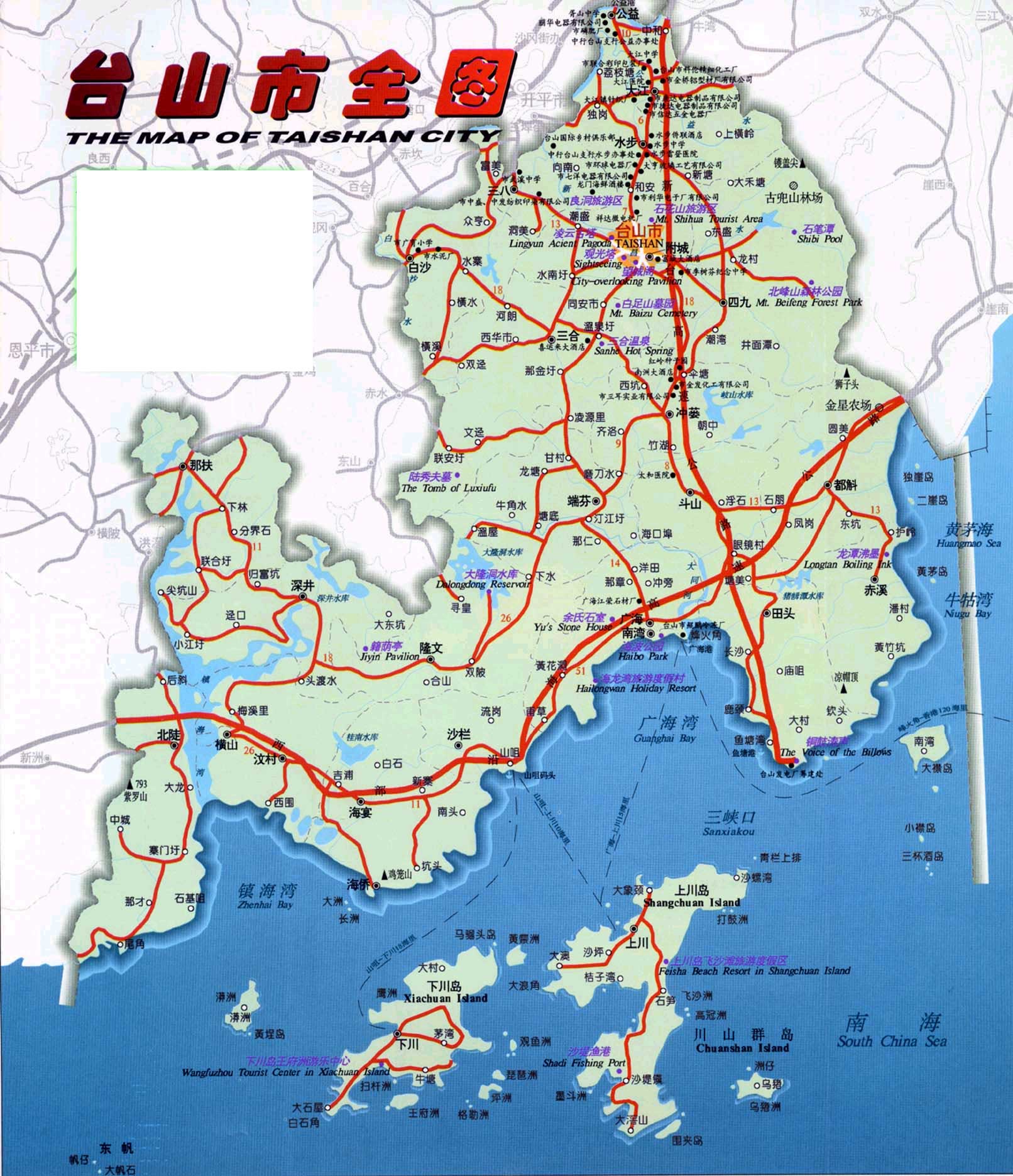
Taishan Merchant Web
Retrieved from "http://en.wikipedia.org/wiki/Taishan"
Presbyterian Website - New Zealand Missionaries to China
http://search.freefind.com/find.html?id=663441&pid=r&mode=ALL&query=chinese&t=s
A limited search facility now exists to view recorded details of Parish and General Assembly related photographs up to 1920 held in our collections. This database may be searched via our on-site search engine or by accessing the "Photo Archives" link in the left hand menu bar. A database of early overseas Mission area photographs may be found on our 'Foreign Missions Office' site (link in left hand menu bar) with Maori Mission photographs under 'Academic Research' (link in left hand menu bar).
The Presbyterian Archives Collections
The archives held in the Presbyterian Archives are from The General Assembly, General Assembly Committees, Foreign, Home and Maori Missions, Local and National Presbyterian Women's and Youth organizations, Parishes and Presbyteries in Otago and Southland, Knox College, Knox Theological Hall and School of Ministry, the Presbyterian Synod of Otago and Southland, the Otago Foundation Trust Board, and the personal papers of Ministers and prominent Presbyterian Laymen and Women from throughout New Zealand. Also held is a large collection of Photographs, Cine film, Lantern slides, Slides, Audio/Video tapes and Plans. Contact details appear below.
http://www.archives.presbyterian.org.nz/archivesframe.html
A limited search facility now exists to view recorded details of Parish and General Assembly related photographs up to 1920 held in our collections. This database may be searched via our on-site search engine or by accessing the "Photo Archives" link in the left hand menu bar. A database of early overseas Mission area photographs may be found on our 'Foreign Missions Office' site (link in left hand menu bar) with Maori Mission photographs under 'Academic Research' (link in left hand menu bar).
The Presbyterian Archives Collections
The archives held in the Presbyterian Archives are from The General Assembly, General Assembly Committees, Foreign, Home and Maori Missions, Local and National Presbyterian Women's and Youth organizations, Parishes and Presbyteries in Otago and Southland, Knox College, Knox Theological Hall and School of Ministry, the Presbyterian Synod of Otago and Southland, the Otago Foundation Trust Board, and the personal papers of Ministers and prominent Presbyterian Laymen and Women from throughout New Zealand. Also held is a large collection of Photographs, Cine film, Lantern slides, Slides, Audio/Video tapes and Plans. Contact details appear below.
http://www.archives.presbyterian.org.nz/archivesframe.html
New Zealand Chinese Misson
The Story of The New Zealand Chinese Mission
1867 to 1952
The title image portrays Tang Yin Ling of Horseflat, Macraes, Central Otago, returning home after collecting his supplies. Photograph by Rev Alexander Don, c.1900-01.
The Beginning :
From the middle of the 19th century, civil and foreign instigated wars as well as a consequent economic downturn, particularly in the southern Provinces, led countless thousands of Chinese nationals to leave their homeland in search of more profitable work and relative safety overseas. The discovery of gold in Otago, New Zealand in the 1860's brought a veritable rush of Chinese immigrants here. The men came alone leaving behind wives and children. Not one of these men intended to remain in New Zealand, they did not view themselves as colonists. Their hearts were always 'at home' where they planned to return when fortune smiled upon them, in life if not also in death. The Chinese went to considerable lengths to bury their dead in the land of their birth.
Chinese communities sprang up quickly on the various goldfields firstly in Otago and later spreading to other South Island fields. They tended to group together in their own communities, characterized by their almost windowless huts made of stones or turf, generally with thatch or sacks for roofs. The Chinese were industrious and hard working, and to the European extremely superstitious. The attitude of their European neighbours was generally one of prejudism and mistrust. The culture of the Chinese with their own customs and language, unique style of clothing and the obligatory long kues (pony tails) was in stark contrast to their own.
http://www.archives.presbyterian.org.nz/missions/nzchinesehistory.htm
1867 to 1952
The title image portrays Tang Yin Ling of Horseflat, Macraes, Central Otago, returning home after collecting his supplies. Photograph by Rev Alexander Don, c.1900-01.
The Beginning :
From the middle of the 19th century, civil and foreign instigated wars as well as a consequent economic downturn, particularly in the southern Provinces, led countless thousands of Chinese nationals to leave their homeland in search of more profitable work and relative safety overseas. The discovery of gold in Otago, New Zealand in the 1860's brought a veritable rush of Chinese immigrants here. The men came alone leaving behind wives and children. Not one of these men intended to remain in New Zealand, they did not view themselves as colonists. Their hearts were always 'at home' where they planned to return when fortune smiled upon them, in life if not also in death. The Chinese went to considerable lengths to bury their dead in the land of their birth.
Chinese communities sprang up quickly on the various goldfields firstly in Otago and later spreading to other South Island fields. They tended to group together in their own communities, characterized by their almost windowless huts made of stones or turf, generally with thatch or sacks for roofs. The Chinese were industrious and hard working, and to the European extremely superstitious. The attitude of their European neighbours was generally one of prejudism and mistrust. The culture of the Chinese with their own customs and language, unique style of clothing and the obligatory long kues (pony tails) was in stark contrast to their own.
http://www.archives.presbyterian.org.nz/missions/nzchinesehistory.htm
Sun Yat Sen
http://www.wanqingyuan.com.sg/english/onceupon/onceupon.html
The Life of Dr Sun Yat Sen
Young Dr SunWhen China experienced incessant domestic trouble and foreign invasion, the people had no means of livelihood as the country was gradually being carved up. It was during this tumultuous period that a person who was to deliver China from her misery was born. He was Sun Yat Sen.
On November 12 1866, Sun Yat Sen was born into a tenant-peasant family in Cuiheng village, Xiangshan county, Guangdong. He had many monikers. He was known as Sun Wen, Deming (childhood name) or Dixiang (name he took at 20). In his adulthood, he assumed the name of Rixin or Yixian (Yat Sen) which his foreign friends refer to him as. When he was conducting revolutionary activities in Japan, he used the Japanese name, Nakayama Kikori (Zhongshan Qiao). On establishing the republic, people referred to him as Mr Zhongshan.
The Life of Dr Sun Yat Sen
Young Dr SunWhen China experienced incessant domestic trouble and foreign invasion, the people had no means of livelihood as the country was gradually being carved up. It was during this tumultuous period that a person who was to deliver China from her misery was born. He was Sun Yat Sen.
On November 12 1866, Sun Yat Sen was born into a tenant-peasant family in Cuiheng village, Xiangshan county, Guangdong. He had many monikers. He was known as Sun Wen, Deming (childhood name) or Dixiang (name he took at 20). In his adulthood, he assumed the name of Rixin or Yixian (Yat Sen) which his foreign friends refer to him as. When he was conducting revolutionary activities in Japan, he used the Japanese name, Nakayama Kikori (Zhongshan Qiao). On establishing the republic, people referred to him as Mr Zhongshan.
Ventnor - Shipping Disaster
DISASTERS AND MISHAPS – SHIPWRECKS
Ventnor
In October 1902 the Chong Shin Tong Society and other Chinese interests chartered the 3,961-ton twin-screw steamer Ventnor to carry 499 coffins, containing the remains of Chinese who had died in New Zealand, for reburial in their homeland. Besides these, she also carried 5,357 tons of Westport coal. On 26 October 1902, after completing her loading, the Ventnor sailed from Wellington bound for Hong Kong. Weather conditions were fine and the sea smooth at the time of her departure. Shortly after noon on the following day she struck a submerged rock off Cape Egmont and was holed forward. The engines were reversed and the ship managed to get free. As there were no suitable dock facilities at Wellington, the master decided to proceed to Auckland via North Cape for repairs. In the meantime the pumps were brought into use, but these could not cope with the water. By 9 p.m. on 28 October, when Ventnor was about 10 miles off Omapere, Hokianga Harbour, the ship became unmanageable and it was apparent that she would soon founder. Although all boats were launched, 13 lives were lost when the captain's boat was sucked under with the ship. The Ventnor's unusual cargo was not recovered. This was not the first occasion that Chinese corpses had been sent from New Zealand. In the 1880s a similar shipment had been made, though on a much smaller scale than that of 1902.
Ventnor
In October 1902 the Chong Shin Tong Society and other Chinese interests chartered the 3,961-ton twin-screw steamer Ventnor to carry 499 coffins, containing the remains of Chinese who had died in New Zealand, for reburial in their homeland. Besides these, she also carried 5,357 tons of Westport coal. On 26 October 1902, after completing her loading, the Ventnor sailed from Wellington bound for Hong Kong. Weather conditions were fine and the sea smooth at the time of her departure. Shortly after noon on the following day she struck a submerged rock off Cape Egmont and was holed forward. The engines were reversed and the ship managed to get free. As there were no suitable dock facilities at Wellington, the master decided to proceed to Auckland via North Cape for repairs. In the meantime the pumps were brought into use, but these could not cope with the water. By 9 p.m. on 28 October, when Ventnor was about 10 miles off Omapere, Hokianga Harbour, the ship became unmanageable and it was apparent that she would soon founder. Although all boats were launched, 13 lives were lost when the captain's boat was sucked under with the ship. The Ventnor's unusual cargo was not recovered. This was not the first occasion that Chinese corpses had been sent from New Zealand. In the 1880s a similar shipment had been made, though on a much smaller scale than that of 1902.
Lawrence Cemetery
LAWRENCE CEMETERY
Block 3 Plot 26
500 Agnes Chow Chie died 22/3/1896 aged 29. Erected by her friends. Stone is decorative white marble slab
620 Chum Shim Kong Kung
753 Lee William Sing
718 Sarah McShane Yet See
759 Charley Fook Ying
Maria Ah Ying
249 Jane Fook You
Chinese Burials
Although there is a Chinese section marked on the Ground Plan of the cemetery behind the “old” general section, there is no sign of anything on the ground today – in fact the Chinese section appears to be outside the Cemetery boundary fence in 1982. However the following is a list of names appearing on Page 290 in the old Burial Book.
620 Sue Chong Quce 2 /2/1929
Ah Chang 13/6/1929
Yeck Gie 26/2/1931
Fau Siu 10/6/1935
Jong Mui Yow 27/6/1939
Kong Kung Chow 24/9/1939
Chow Shim 5/9/1945 aged 96 years
Seemingly, all Chinese buried prior to 1902 were disinterred for their bodies to be shipped home to China for burial there. This was on the ship “Ventnor” which carried 499 coffins of Chinese. The ship was wrecked off Omapere 28 October 1902 with the loss of 13 crew.
Plot 753 Block 3 Plot 37. Bare but shows burial of William Sing Lee.
Plot 718 Block 2 Plot 22. Sarah McShane the beloved wife of James Yet See who departed this life 6 May 1889 aged 31 years. Rest in Peace.
Plot 759 Block 3 Plot 29. Bare. Burial of Charley Fook Ying.
Plot 760 Block 3 Plot 28. Chinese inscription then Maria Ah Ying died 28/8/1897 aged 58 years.
Plot 249 Block 5 Plot 13. Jane Fook You died 18/5/1905 aged 35 years.
East Taiere Cemetery
1490 Block W Plot 704 / 703 Ding Chew. Bare
1489 Block W Plot 705 Kee Ling Young, most beloved husband of Elizabeth – died 7 October 1969 23 years. Chinese inscription.
1491 Block W Plot 702 / 701. Chin Gun. Bare
1346 Block Y Plot 26 Chinese Inscription. Kathleen Ding 1955-1957.
1608 Block V Plot 798 / 797. A dear husband and father. Chun Ding died 5/5/1966 aged 90 years. Also Choie Shee beloved wife and mother, died 25/4/1978 aged 100 years. Always remembered. R Millin and Sons.
1607 Block V Plot 800 / 799. A dear husband and father Hok Yan Sew Hoy died 19/9/1973 aged 74 years. Always remembered. Chinese inscription. Till Short/ Millin.
317 Block A Plot 235A Wong. Bare
1609 Block V Plot 796 / 795. A Dear father Jun Tim Sew Hoy passed away 16/4/1966. Ever remembered. Chinese inscription.
West Taiere Cemetery
178 Block 15 Plot 34. Burial Ah Chin. Removed to China.
Block 3 Plot 26
500 Agnes Chow Chie died 22/3/1896 aged 29. Erected by her friends. Stone is decorative white marble slab
620 Chum Shim Kong Kung
753 Lee William Sing
718 Sarah McShane Yet See
759 Charley Fook Ying
Maria Ah Ying
249 Jane Fook You
Chinese Burials
Although there is a Chinese section marked on the Ground Plan of the cemetery behind the “old” general section, there is no sign of anything on the ground today – in fact the Chinese section appears to be outside the Cemetery boundary fence in 1982. However the following is a list of names appearing on Page 290 in the old Burial Book.
620 Sue Chong Quce 2 /2/1929
Ah Chang 13/6/1929
Yeck Gie 26/2/1931
Fau Siu 10/6/1935
Jong Mui Yow 27/6/1939
Kong Kung Chow 24/9/1939
Chow Shim 5/9/1945 aged 96 years
Seemingly, all Chinese buried prior to 1902 were disinterred for their bodies to be shipped home to China for burial there. This was on the ship “Ventnor” which carried 499 coffins of Chinese. The ship was wrecked off Omapere 28 October 1902 with the loss of 13 crew.
Plot 753 Block 3 Plot 37. Bare but shows burial of William Sing Lee.
Plot 718 Block 2 Plot 22. Sarah McShane the beloved wife of James Yet See who departed this life 6 May 1889 aged 31 years. Rest in Peace.
Plot 759 Block 3 Plot 29. Bare. Burial of Charley Fook Ying.
Plot 760 Block 3 Plot 28. Chinese inscription then Maria Ah Ying died 28/8/1897 aged 58 years.
Plot 249 Block 5 Plot 13. Jane Fook You died 18/5/1905 aged 35 years.
East Taiere Cemetery
1490 Block W Plot 704 / 703 Ding Chew. Bare
1489 Block W Plot 705 Kee Ling Young, most beloved husband of Elizabeth – died 7 October 1969 23 years. Chinese inscription.
1491 Block W Plot 702 / 701. Chin Gun. Bare
1346 Block Y Plot 26 Chinese Inscription. Kathleen Ding 1955-1957.
1608 Block V Plot 798 / 797. A dear husband and father. Chun Ding died 5/5/1966 aged 90 years. Also Choie Shee beloved wife and mother, died 25/4/1978 aged 100 years. Always remembered. R Millin and Sons.
1607 Block V Plot 800 / 799. A dear husband and father Hok Yan Sew Hoy died 19/9/1973 aged 74 years. Always remembered. Chinese inscription. Till Short/ Millin.
317 Block A Plot 235A Wong. Bare
1609 Block V Plot 796 / 795. A Dear father Jun Tim Sew Hoy passed away 16/4/1966. Ever remembered. Chinese inscription.
West Taiere Cemetery
178 Block 15 Plot 34. Burial Ah Chin. Removed to China.
Dunedin City Council - Shanghai experts help Garden progress
Dunedin’s Chinese Garden has moved a step closer to reality – thanks to the expert input of a delegation of cultural specialists from the Shanghai Museum. The Head of Shanghai Museum, Mr Hu Jianzhong, and three colleagues have spent a week in Dunedin (Shanghai’s sister city) going over the plans for the elegant Classical Chinese Garden planned for the vacant lot behind the Otago Settler’s Museum.
The delegates with Councillor Peter Chin Back: Cr Peter Chin and interpretor Liang Wei. Front: Chinese ancient architecture specialist Tan Yufeng, Head of the Shanghai Museum, Hu Jianzhong and Deputy Chief of the office in the Shanghai Culture Development Funding Association, Shi Jiancheng.Mr Hu said the talks between the Dunedin Chinese Gardens Trust, DCC representatives and the Shanghai delegates were a huge success. He said: “Our discussions were very fruitful and we have certainly reached an agreement on how the gardens should progress. “The end result will not only show off Dunedin’s Chinese heritage and cultural traditions but will also be a great sight-seeing place for tourists. “We can already envisage the opening day and hope to back here to enjoy it. We believe these gardens will really strengthen the link between Dunedin and Shanghai.” Councillor Peter Chin, who has been involved in the garden’s development since the idea was conceived as part of Otago’s 150th anniversary, is rapt with the progress that’s been made. He said: “I’m tremendously happy with the latest talks. It was great having the delegation over as it’s so much easier to talk to people face-to-face. It was also really important for Mr Hu and his colleagues to view the site and the buildings around it to help with the design.” The Dunedin Chinese Garden will transform the unattractive lot behind the Otago Settler’s Museum into a spectacular Classical garden in keeping with the tradition of the Qing Dynasty (1644-1911).
An overview of the planned gardenThe garden's design is based upon the private gardens in Suzhou from the 10th to the 19th centuries. These gardens, unlike the imperial gardens, were quite small and informal in design. The Dunedin Chinese Garden will feature three pavilions, several courtyards, water features, terraces and a Grand Rockery. The garden will be surrounded by a traditional high wall. An important part of the garden will be the Descendants’ Gallery that will contain displays on New Zealand Chinese and plaques acknowledging the donations made to the garden by ethnic Chinese and Europeans. There will also be a Creeds and Customs Gallery where Chinese folklore, beliefs and customs will be depicted in display panels and trellis windows. While in Dunedin, the Chinese delegation was able to fine-tune the garden’s plans with local architects and other project members.
An image of the Sun Gum Shan bridge, planned for the garden.
Mr Hu said: “We have been discussing a lot of the engineering and technical aspects to prepare for the next stage..which will be getting ready for construction.“I believe that the DCC staff, along with the hard-working members of the Chinese Garden Trust will complete this garden very successfully and it will become one of the best of its sort in the world.” The Chinese Garden Trust is now busy fundraising towards the approximate figure of $2 million needed to complete the project. Some donations, including $150,000 from the local Chinese community, have already been gratefully received.
The delegates with Councillor Peter Chin Back: Cr Peter Chin and interpretor Liang Wei. Front: Chinese ancient architecture specialist Tan Yufeng, Head of the Shanghai Museum, Hu Jianzhong and Deputy Chief of the office in the Shanghai Culture Development Funding Association, Shi Jiancheng.Mr Hu said the talks between the Dunedin Chinese Gardens Trust, DCC representatives and the Shanghai delegates were a huge success. He said: “Our discussions were very fruitful and we have certainly reached an agreement on how the gardens should progress. “The end result will not only show off Dunedin’s Chinese heritage and cultural traditions but will also be a great sight-seeing place for tourists. “We can already envisage the opening day and hope to back here to enjoy it. We believe these gardens will really strengthen the link between Dunedin and Shanghai.” Councillor Peter Chin, who has been involved in the garden’s development since the idea was conceived as part of Otago’s 150th anniversary, is rapt with the progress that’s been made. He said: “I’m tremendously happy with the latest talks. It was great having the delegation over as it’s so much easier to talk to people face-to-face. It was also really important for Mr Hu and his colleagues to view the site and the buildings around it to help with the design.” The Dunedin Chinese Garden will transform the unattractive lot behind the Otago Settler’s Museum into a spectacular Classical garden in keeping with the tradition of the Qing Dynasty (1644-1911).
An overview of the planned gardenThe garden's design is based upon the private gardens in Suzhou from the 10th to the 19th centuries. These gardens, unlike the imperial gardens, were quite small and informal in design. The Dunedin Chinese Garden will feature three pavilions, several courtyards, water features, terraces and a Grand Rockery. The garden will be surrounded by a traditional high wall. An important part of the garden will be the Descendants’ Gallery that will contain displays on New Zealand Chinese and plaques acknowledging the donations made to the garden by ethnic Chinese and Europeans. There will also be a Creeds and Customs Gallery where Chinese folklore, beliefs and customs will be depicted in display panels and trellis windows. While in Dunedin, the Chinese delegation was able to fine-tune the garden’s plans with local architects and other project members.
An image of the Sun Gum Shan bridge, planned for the garden.
Mr Hu said: “We have been discussing a lot of the engineering and technical aspects to prepare for the next stage..which will be getting ready for construction.“I believe that the DCC staff, along with the hard-working members of the Chinese Garden Trust will complete this garden very successfully and it will become one of the best of its sort in the world.” The Chinese Garden Trust is now busy fundraising towards the approximate figure of $2 million needed to complete the project. Some donations, including $150,000 from the local Chinese community, have already been gratefully received.
Subscribe to:
Posts (Atom)